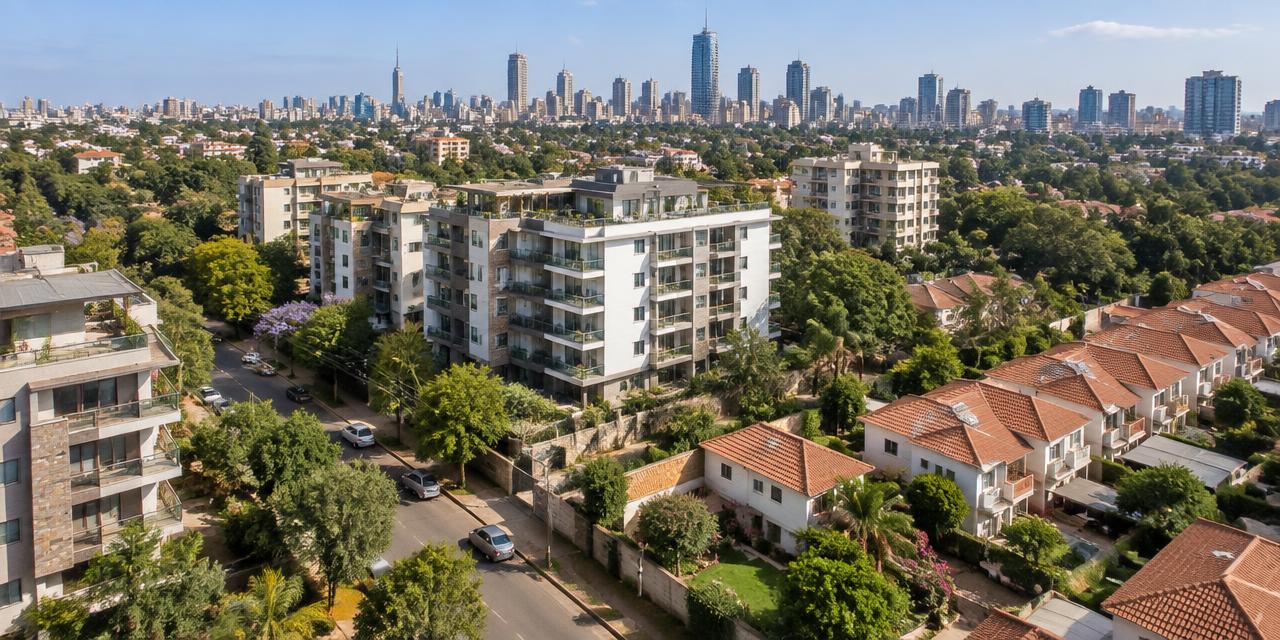
Where to Buy Property in Nairobi: The US Diaspora Buyer's Neighborhood Guide
By the Nestadia Editorial Team · Published September 24, 2026
Quick answer
For rental income, US diaspora buyers do best with small apartments in Kilimani, Kileleshwa, and Westlands. For a home to return to, Karen, Langata, Lavington, and Runda hold value. For growth at a lower entry price, look at Kiambu Road, Ruaka, Ruiru, and Syokimau — where off-plan risk is highest. As a non-citizen you can hold leasehold up to 99 years, not freehold.
Most US-based buyers looking at Kenya are really looking at Greater Nairobi — the city plus the corridors along Kiambu Road, Ruaka, Ruiru, and Syokimau. That is where the residential stock, the tenants, the comparable sales, and almost all of the diaspora transaction volume sit.
The hard part isn't finding a listing. It's knowing what each neighborhood is actually for. A small Kilimani apartment and a Karen house are not two versions of the same purchase — they behave completely differently on rent, resale, and risk.
This guide breaks Greater Nairobi down the way a buyer 8,000 miles away needs it: what the stock is, who rents it, what kind of title you end up holding, and what specifically goes wrong there.
First decide what the purchase is for
Nearly every disappointing Kenya purchase we see started with the wrong question. Buyers ask "which area is best?" when the answer depends entirely on which of these three they want.
If you want rental income
Small apartments in Kilimani, Kileleshwa, and Westlands give the highest gross yields in Greater Nairobi and the easiest tenant replacement. You accept more supply competition, more churn, and a service charge.
If you want a home to return to
Karen, Langata, Lavington, and Runda hold their value and give you space, but yields are modest. Treat them as capital preservation plus lifestyle, not as cash flow.
If you want capital growth
The Kiambu Road, Ruaka, Ruiru, and Syokimau corridors carry the growth thesis — and the highest execution risk, because most of the product is off-plan or newly completed.
Greater Nairobi neighborhoods at a glance
| Area | Typical stock | Who rents it | Interest you hold |
|---|---|---|---|
| Kilimani & Kileleshwa | 1–3 bedroom apartments in mid-rise and high-rise blocks | Young professionals, NGO and corporate staff, short-stay guests | Sectional title or share in a management company |
| Westlands & Riverside | Apartments and serviced units close to offices and malls | Corporate tenants, expatriate staff, serviced and short-stay demand | Sectional title, often with a service charge and management company |
| Lavington & Riara | Larger apartments, maisonettes, townhouses in gated compounds | Families, long-lease professional households | Sectional title for apartments; sub-lease for townhouses |
| Karen & Langata | Houses on larger plots, townhouses in gated schemes | Expatriate families, diplomats, returning diaspora owner-occupiers | Freehold or long leasehold on a subdivided parcel |
| Runda, Muthaiga & Gigiri | Detached houses on large plots in controlled estates | Diplomatic and UN-linked tenants, senior expatriate staff | Freehold or long leasehold, usually with estate covenants |
| Kiambu Road, Ruaka & Ruiru corridor | Master-planned gated communities, townhouses, newer apartment blocks | Middle-income families commuting into the city | Sub-lease within a scheme, or title on a subdivided parcel |
| Syokimau, Mlolongo & the Athi River side | Apartments and townhouses near the expressway and airport | Airport and industrial-area workers, commuting families | Sub-lease or scheme title |
Prices and rents move, and vary street by street within each of these areas. Treat this as a map of market character, then price the specific block with current comparable lettings.
Neighborhood by neighborhood
Kilimani & Kileleshwa
Nairobi's densest apartment market and the default entry point for diaspora buyers who want rent rather than a family home. Deep tenant pool, deep resale market, and the most comparable sales data of any part of the city — which also means the most supply competing for the same tenant.
Watch for: Heavy new-build supply can soften rents and lengthen void periods. Check how many units in the same block are already listed for rent before you believe a projected yield.
Westlands & Riverside
Nairobi's commercial core, so residential demand is driven by proximity to offices. Rents are typically quoted higher than Kilimani for comparable finishes, and furnished or serviced units can command a premium.
Watch for: Traffic, parking ratios, and service charge levels. A high service charge quietly eats the yield advantage, so ask for the actual annual figure, not a per-square-metre estimate.
Lavington & Riara
A step up in unit size and privacy from Kilimani, with more family tenants and longer leases. Lower gross yield than a small Kilimani apartment, but generally steadier occupancy and lower tenant churn.
Watch for: Developments squeezed onto plots originally zoned for single houses. Confirm the change of use and county approvals actually exist for the block you're buying into.
Karen & Langata
The classic space-and-garden market, and where most diaspora buyers who intend to move back eventually look. Bought more for lifestyle and capital preservation than for cash flow.
Watch for: Subdivision history and boundary accuracy. Karen parcels have been subdivided repeatedly over decades, so the survey, the beacons, and the registry record all have to agree.
Runda, Muthaiga & Gigiri
Nairobi's most established premium residential belt, anchored by the UN complex and embassies at Gigiri. Rental demand is narrow but well paid, and values are historically resilient.
Watch for: Estate covenants and minimum plot sizes limit what you can build or subdivide. Read them before you plan any development, and confirm whether a non-citizen can hold the interest on offer.
Kiambu Road, Ruaka & Ruiru corridor
The main growth corridor. Prices per unit are lower than inner-city suburbs and infrastructure has improved substantially, so this is where the largest capital-growth stories are pitched to diaspora buyers.
Watch for: This is also where off-plan risk concentrates. Verify the developer's own title to the scheme parcel, the county approvals, and the route to registering your unit in your own name.
Syokimau, Mlolongo & the Athi River side
Lower entry prices and strong commuter access via the expressway. Suits buyers optimising for the cheapest route into the Nairobi market rather than prestige.
Watch for: Water, sewer, and road standard vary sharply street by street. Two schemes a kilometre apart can have completely different servicing.
Found a Nairobi property you're serious about?
Key legal facts for US buyers in Nairobi
- Non-citizen ownership
- Leasehold only, maximum 99 years (Constitution of Kenya 2010, Article 65). Freehold held by a non-citizen converts to a 99-year lease.
- Apartments
- Held as a sectional title under the Sectional Properties Act 2020, which requires older long sub-leases to be converted into individual unit titles.
- Registration
- Nairobi was the pilot county for the ArdhiSasa digital land system under the Land Registration Act 2012 — search the record there, through your own advocate.
- Stamp duty
- 4% of value for property within a municipality such as Nairobi; 2% outside municipalities.
- Agricultural land
- Non-citizens cannot hold agricultural land (Land Control Act). Check zoning on peri-urban plots in Kiambu and Machakos.
Six checks before you pay anything in Nairobi
- 1
Confirm which registry your title actually sits in
Nairobi titles are progressively being migrated to the digital land information system. A seller's paper title, a title shown in the digital system, and what the registry index actually says are three different things. Your own lawyer should pull the record — not the agent, and not the seller's lawyer.
- 2
For any apartment, get the sectional title position in writing
Since the Sectional Properties Act, apartment interests are being converted from long sub-leases and management-company shares into sectional titles. Ask exactly what you will be registered as owning, whether conversion has happened for that block, and what the common-area and service-charge structure is.
- 3
Check the interest is one you can legally hold
Non-citizens are generally limited to leasehold rather than freehold, with a maximum term, and agricultural land carries further restriction. If you are a dual citizen, the position is different again. This is a question for Kenyan counsel before you commit, not after.
- 4
Verify services, not just the building
Ask about water source and borehole yield, sewer connection versus septic, backup power, and road access in the rainy season. In several of Nairobi's fastest-growing corridors, servicing — not construction quality — is the thing that determines whether a unit rents.
- 5
Get a real yield, not a brochure yield
Take the achievable monthly rent for comparable units currently let in that block, deduct service charge, management fee, rental income tax, and a realistic void allowance. Brochure yields almost always quote gross rent on asking price with none of that removed.
- 6
Send money through escrow, never direct to a developer
Your funds should sit with a neutral third party and release against verified milestones, with the largest tranche held until your interest is registered in your name.
Each of these has its own guide in this series: verifying a Kenyan title, what you can legally own as a non-citizen, buying off-plan safely, and the five ways Kenya deals go wrong.
Frequently asked questions
Which Nairobi neighborhood gives the best rental yield?
Small apartments in Kilimani, Kileleshwa, and Westlands typically produce the highest gross rental yields in Greater Nairobi, because unit prices are moderate and tenant demand from young professionals and corporate staff is deep. Larger houses in Karen, Lavington, and Runda produce noticeably lower yields but hold value well. Always net off service charge, management, tax, and void periods before comparing.
Where should a US-based buyer buy in Nairobi if they plan to move back?
Karen, Langata, Lavington, and Runda are the areas most diaspora buyers choose for eventual owner-occupation: larger plots, gardens, established infrastructure, and good schools. These are capital-preservation and lifestyle purchases rather than cash-flow purchases.
Is the Kiambu Road and Ruiru corridor a good investment?
It is where most of Nairobi's growth story and most of its new supply sit, so entry prices are lower and upside is plausible. It is also where off-plan risk concentrates. Only buy there with verified developer title, confirmed county approvals, staged payments through escrow, and a clear path to registering your unit in your own name.
Can a US citizen buy an apartment in Nairobi?
Yes. Non-citizens are generally restricted to leasehold interests rather than freehold, subject to a maximum term, and agricultural land carries additional restrictions. Most Nairobi apartments are held in a form available to non-citizens, but confirm the exact interest and its registrability with Kenyan counsel before paying anything.
Should I buy an apartment or a house in Nairobi?
Apartments in Kilimani, Kileleshwa, and Westlands are easier to let, easier to resell, and carry lower entry prices, which is why they dominate diaspora purchases. Houses in Karen, Langata, and Runda suit buyers who want space and a future home. Apartments bring a service charge and a management company; houses bring maintenance and security costs you carry yourself.
What is the biggest risk when buying in Nairobi from abroad?
Paying before an independent party has verified the title, the seller's authority, and the physical property. Forged or duplicated titles, units sold twice, unapproved developments, and off-plan schemes that stall are all well documented. Independent legal verification plus an independent site inspection, with funds held in escrow, removes most of that exposure.